Lo bonito de estar loco y andar suelto | The beauty of being crazy and be able walk freely
1/5/10
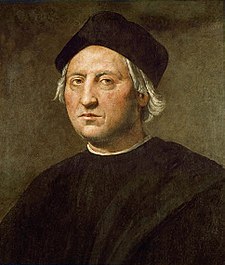
Again Colombus ... what was he finally?
1/4/10
"Hey, I´m here, I love my job, I greet you and please feel safe: the army is here".
Happy new entrepreneurial year!
10/21/09
Business School Entrepreneurs
In the beginning
With traditional jobs difficult to come by, MBA students are increasingly looking to start their own businesses. We talk to three business-school graduates about what it takes to succeed
Aloysius Fekete, Chief Executive Officer, MaxBips
Business school can give you many of the useful attributes you need to be a successfulentrepreneur, says Aloysius Fekete, chief executive of London-based start-up MaxBips. But it can’t give you the only essential one: desire. “You just need that bug,” he explains. “That’s what drives you. Business school doesn’t necessarily give you that. But it does allow you to see the possibilities—and realise them—in a way that is more difficult without that experience.”
Taking some time away from corporate life also gave Mr Fekete the space to think clearly about what it was he wanted to achieve. “I did a two-year [MBA] programme, which was important because I needed that amount of time to re-programme myself,” he says. “[Becoming anentrepreneur] is a big step, a big risk to take. Yes there are skills you learn that are part of your toolkit. But there are also different ways of thinking.”
Indeed, risks don’t come much bigger than starting up a financial services firm in the middle of a banking crisis. But after graduating from the Schulich School of Business at York University in Canada, Mr Fekete moved to London and set up MaxBips, a website where small- and medium-size enterprises (SMEs) auction their surplus cash to banks. The bank offering the most favourable terms wins.
The financial environment has been a challenge for MaxBips. When the Bank of England dropped its base rate to 0.5%, it took the wind out of the sails of anyone looking for a decent rate of interest. Nevertheless, the company is flourishing because, like many a successful start-up, it has identified, and then plugged, a gap in the market. “Many SMEs hold their surplus cash in their current accounts, which these days earn 0% interest,” explains Mr Fekete. “The managing director of a company needs to do everything he can to maximise the efficiency of its cash management because the return on their surplus cash can make the difference between a profit- and a loss-making year.”
Furthermore, he isn’t shy over making bold claims about influence that he and his fellow entrepreneurs can bring to bear in the recession. “Frankly I think we will be the saviour of the economy,” he says. “There isn’t credit in the system to fund growth, so what will get us out of this is entrepreneurs coming in and finding new efficiencies for SMEs to do their business and finding better ways for business to run.”
Of course, a lack of credit doesn’t just affect existing SMEs. It is also an obvious barrier to starting up a business. It is therefore more vital than ever that entrepreneurs keep their costs as low as possible. The good news, says Mr Fakete, is that this is becoming easier to achieve. “There is a revolution happening in business and people are realising they can run their businesses much more cheaply. The internet is the enabler here. The internet has been around in commercial form for 10 or 15 years, but it has really yet to be integrated into how businesses function. Yes we all have computers but have we really changed the way we do things as businesses? There are so many things out there that can reduce your cost base in terms of internet technology; it is easier to run a virtual distributed workforce and a lot of services now like network support come a lot more cheaply.”
Despite coming from North America, the spiritual home of the entrepreneur, Mr Fakete says he has been surprised at how pain-free it has been to start up a business on the other side of the pond. “I’ve heard remarks that it’s not so easy to start a company in the UK, and perhaps that was the case five or ten years ago,” he says. “But my case has been a positive one. I really do get the sense that there is a growing and vibrant entrepreneurial community in London and there is a real desire to foster that. Starting a company was very easy from a red tape point-of-view.”
Despite this, he still recognises differences in culture. “From a funding point-of-view the States has a more well-developed venture-capital community. And there is also no stigma of having started a company and failed in the US—in fact it is looked upon somewhat positively; I’ve had the comment [from a venture capitalist] that he wouldn’t consider funding someone who hasn’t started at least one company and failed.” As he starts out on his first entrepreneurial venture, it is not a theory Mr Fakete is keen to test.
Ian Dailey, President and Co-Founder, Husk Insulation
Like so many MBA students, when Ian Dailey enrolled at the University of Michigan’s RossSchool of Business he knew that he wanted to start his own business at some point. He just didn’t expect it to happen so quickly.
“You will hear this from a lot of students,” he says. “The university has a high enrolment in the entrepreneurs’ club, but most take a look at the loans they have taken out [to pay for their tuition] and the uncertainty involved in setting up a business and they end up taking corporate jobs. I was in the same boat too. You may have aspirations to be an entrepreneur, but on-campus recruiting becomes such a big thing and everyone’s getting jobs left and right and you get sucked into that world of corporate presentations. But that never seemed right for me.”
Things changed for Mr Dailey after he encountered Professor Richard Laine from the university’s materials science department. He got to know the professor while serving an internship at Michigan's Office of Technology Transfer, which licenses products that have been invented within the university. On returning to the MBA programme and a class on new venture creation—essentially a business-plan writing course—he was searching around for a suitable idea for a case study. Professor Laine sprung to mind. “Since I had the relationship with the professor I approached him and he said: ‘I’ve got this thing that’s been on the back burner for a couple of years but I think it’s really promising—take a look.’”
What Professor Laine had developed was a way of converting an agricultural waste by-product, heading for landfill, into the core material for high-performance insulation panels that can be used in buildings and refrigerators. The resulting business plan was so impressive that Mr Dailey, along with four of his classmates, entered it into a university competition. They duly won, collecting $15,000 in cash in the process.
Immediately Mr Dailey was faced with a dilemma: to carry on searching for a corporate job, or to make real a venture that he had only envisioned as an academic exercise. In the end, the collapse in the MBA jobs market helped cement his decision. “Anyone is going to find it more difficult to make that leap if they have got a $150,000 [job] offer from a consulting company or an investment bank,” he explains. “So in the absence of that the decision became a lot easier.”
The next problem was how to finance the start-up, which he named Husk Insulation. With venture capitalists smarting from the economic downturn, the team stumbled across a solution. With Michigan’s business-plan competition already in the bag, they packed their presentations and set about a rock-star-like tour of similar contests across America. “We said ‘OK, we’ve really got something here,’ and then we started entering into business-plan competitions all over the country. And we won at Carnegie Mellon, second place at Colorado, won a competition sponsored by Dow Chemicals and then most recently won the MIT clean energy prize competition.”
The MIT prize alone earned them $200,000. In all the team won $280,000, enough to give them all the capital they needed to start up the business. “The competitions took us from February to the middle of May, and that was my primary activity at that time—school took a back burner. But you learn so much during these competitions that it is just a fantastic educational experience in its own right. It is not a matter of doing a dog-and-pony show where you’ve got the same presentation you give over and over again—your business plan becomes a living document. We’d present it one day, get questions which frankly we didn’t have an answer to, and be up half the night re-working it to make it better.”
Since making the transition from business plan to live venture, Mr Dailey is yet to reap the personal rewards of his labour. Husk Insulation may be projecting revenue of $30m a year by 2014, but for the time being the company is absorbing every bit of spare cash. “I still don’t have money to spend on me,” he says. “It’s got to go to research, it’s got to go to travel, it’s got to go to a million other things before it’s going to go into my pocket.”
Such hardship is difficult enough at the best of times. But for an MBA graduate, there is the additional worry of servicing the debt accumulated paying for study; at Michigan tuition fees alone are over $41,000 per year. Mr Dailey remains sanguine, though. “Frankly I just try to fool myself everything will be OK. I don’t know of a better way to deal with it. I think you just have to remain flexible—you can cram down your loan payments so you’re paying just a little over interest so they don’t seem insurmountable. I tell myself in a couple of years I’ll be in better shape. But that’s what it takes to be an entrepreneur. You just have to have faith that it’s going to work out.”
Daniel Callaghan, Managing Director, MBA & Company
Daniel Callaghan says entrepreneurialism is in his blood. His family boasts a proud history of self-made men. Unlike them, though, he is the only one to have gone to business school first.
Having graduated this year with an MBA from IESE, in Spain, he saw what he believed to be a gap in the market and started MBA & Company, an internet platform that allows companies to find MBAs for short-term, freelance consultancy roles. The firm is particularly focused on small- and medium-sized enterprises, which are not only faring better than their larger counterparts in many instances (see article), but also often slip through the net of business school careers services.
But while starting a business has an obvious appeal for MBA students, as high-paying corporate jobs dry up, the rules have changed since the last great entrepreneurial era—the dotcom bubble of the early 2000s. Most notably, finance is far harder to come by. Subsequently, says Mr Callaghan, investors are only being tempted by start-ups that are cheap to get off the ground. “A high start-up base will very much damage your chances because people just don’t want to take that risk,” he says. His own finance is coming predominantly from “angel” investors—rich individuals that in many cases have been nurtured by IESE.
The business model is particularly timely. With fewer students landing their dream roles, MBA & Co has a more talented pool of MBAs from which SMEs can draw. “Our business model does very well in a counter-cyclical market because it becomes all about cost savings and looking for a more flexible labour force, while maintaining the quality of the work [firms] produce,” says Mr Callaghan. “It is almost like labour arbitrage. Some of our students were due to start work at McKinsey or Bain in September, but had their job offers pushed back to January. So our clients are getting a guy for €40 ($56) an hour who would charge €300 [in a year’s time].”
But perhaps the most pressing question is why Mr Callaghan felt the need to go to abusiness school to become an entrepreneur, given that the other successful tycoons in his family had determinedly dodged them. What was it that IESE added that the rest of his family lacked? “It’s the technical and financial skills—the ability to have a conversation with professional investors—and the presentation and document-writing skills. These are the things that you can learn at business school. The things you can’t learn are the courage and conviction to keep pushing it on.”
9/19/09
Random reflections about the Internet ...

... for those Entrepreneurs that still eschew technology ...
It is a clear reality for every contemporary individual that we live in the era of the "flat world". As Best Seller author Thomas Friedman affirms, our world has become a global village where geographical boundaries are no longer seen as barriers for the free flow of talent and for the seizing of opportunities beyond nations. Our humanity has reached one of its peak moments in terms of collaborative work and global problems solution seeking, a reality where networking is one of the strongest leverage points. Would such a description of the current state of the world be ever possible without conceiving the role that internet plays?
There are several evidence pieces that support the fact that the internet invention has been a powerful landmark that has led to our current state of development as humanity and therefore, to the increase of the quality of our lifes. Looking at it from an economical perspective, it`s hard to imagine the concept of globalization without thinking of the Internet as an instrumental tool. Remote awareness of demand and supply of products, efficient performance of electronic (Internet based) commercial transactions, and in general the arise of all kind virtual connections of human talent that do not need to be physically present to identify opportunities and work together around them, are just few examples on the irreplaceable benefits that the Internet enables.
But the internet not only impacts collective systems as economy and society. Looking at the individuals and understanding them as a "self", it is also easy to zero in on marked aspects on how Internet is a resource to develop a person`s potential and therefore lead the individual to a happier life. Internet is an endless avenue and knowledge bank for people to look for information and develop ideas to pursue their personal passions and dreams. People can join social networks that provide the kind of experience and perspective that people need to take decisions and probably, without the Internet they would never have access to those. It´s never been easier and more time-effective to find solutions before than "googling" from the web. On the other hand, Internet has also made entertainment cheaper and therefore more accessible to all kinds of people. With a simple Internet connection and through legal means you can access to resources like movies and music, for instance, and at a much lower price than traditional alternatives.
Internet simply has led our world to a democratization of opportunities, on a collective and personal level. Denying the benefits of working together as human beings is denying the benefits that Internet has for our society as aldo deniying the impact that it has in the quality of our life as citizens of this world.
8/27/09
An Entrepreneur hidden under a consultant´s clothes

8/26/09
From theory to practice (or the common wish to own a restaurant)

2/22/09
Perceptions of Entrepreneurship across time and culture ...
Does the perception, the view or even the attitude towards "entrepreneurship" vary from culture to culture? Was "being an entrepreneur" less valued before?
As you have maybe perceived in some of my previous posts, I am rather of the school of thought of entrepreneurship is a universal and timeless concept– in few words: no matter where and when, there have always been and will always be entrepreneurs. Period. Even though almost nobody doubts that entrepreneurship is a reality, this does not necessarily mean that the way entrepreneurs are seen in different cultures is the same, as also does not mean that at different points of time in recent history the role of entrepreneurship in the society has been the same.
Let´s focus first of time. Recently I was reading an interview made by a Colombian business magazine to Mr. Bo Burlingham, editor of Inc. Magazine, one of the most influential publications on entrepreneurship. Bo affirmed that only few decades ago the figure of an “entrepreneur” was not really appreciated: in the 50s, 60s, & 70s it wasn´t a compliment being called “entrepreneur”. Entrepreneurs were considered weird, strange people, without a clear social value, because at this point of time the dream was becoming a loyal employee of a big corporation. During the 80s, at least in North America, entrepreneurs as Bill Gates, Steve Jobs and Ted Turner started to revert this perception, until the point where still today they remain icons for personal and professional success. If this was the pace for entrepreneurship acceptance in North America, don´t want to imagine what´s left for the rest of the world.
Let´s focus now on culture. Having lived in 5 different countries in past years (Germany, Austria, Brazil, The Netherlands and India) I guess I never stopped before to analyze deeply how each culture saw entrepreneurs. Though now that I think back it´s pretty easy for me to remember:
[I make the disclaimer that the following were my personal experiences and perceptions between 1998 and 2006, and do not necessarily represent realty]
- Germany & Austria: It was not particularly cool to be an entrepreneur. I even was on a conversation with someone that affirmed that being an entrepreneur was kind of irresponsible, cause at the end of the day “you had no real job” and that did not provide any financial security for your family. Being an entrepreneur was a B Plan for those not capable enough to get a traditional job. I must admit that at this point of my life I was not as aware and passionate for entrepreneurship as I am now, that´s why those type of comments did not really mean much for me. But today, thinking back, they really amaze me.
- Brazil: Entrepreneurship was rather a “bohemian” concept, not necessarily having a negative connotation. It was linked to “people that want to change the world”, which despite the romantic aspect of it, was very inspiring. I believe in Brazil is where I started to fall in love with entrepreneurship, in concept and practice …
- India: Entrepreneurship was at its highest expression. Formal and informal entrepreneurship, social and business entrepreneurship, there was a bit (or a bunch!) or everything, it all was blended into the culture. Entrepreneurship was fast, dynamic and well, it was rare not finding someone not related to his/her own business. I worked in India with an entrepreneur and it was an great experience, he was really money/profit oriented, I remember him always saying “This is not an NGO, we have to sell and make good business”.
Have you experienced something particular in other cultures regarding entrepreneurship? Have you ever talked to you grandparents about what in their time meant to be an entrepreneur?
I want to finish quoting Bo Burlingham again; I believe it´s a beautiful reflection to end this post with:
“Entrepreneurship has been always with us when have aimed to move forward and have a better live, and so will be forever. Despite of that, the entrepreneurial environment is always changing, it´s a blend of social, CULTURAL, political and economical changes. For instance, governments can make entrepreneurship easier or simply create barriers to make it simply impossible”.
10/30/08
1492: Conquest of Paradise
This is supposed to be an old movie; it was released in October 1992 for the celebration of the 500th anniversary of the discovery of America. I never heard of it before last weekend though, that I randomly stopped by the video store to ask for any movies related to Columbus, and in general, the preparation of his endeavor to discover “the new world”.
The reason why I was looking for such a movie, is because I kept intrigued by one of the analogies I heard at the Silicon Valley Tour, pointing Queen Isabel of Spain as one of the first Venture Capitalists of the history, when she accepted financing Columbus on his “crazy” project of reaching Asia through a new, never tried before route.
I´m not a movie expert. Also I am aware that movies many times are not as good as books to describe history. Though, I loved the movie … and I think it´s a wonderful piece to use and display, if anyone wants to set up a workshop to explain what entrepreneurship is.
Key moments of the movie to capitalize on:
- The first time, that the project of Columbus was presented to the University of Salamanca, it was harshly rejected. The “experts” did not believe in his not proven, risky proposal, so it did not even reach the stage of being eligible to be presented to the Queen. Even if he had a crisis, he did not stop believing. Lesson: Entrepreneurs never give up. They´ll find many “NO”s on their ways, but that won´t be a reason to quit their dreams.
- He kept fighting, and fighting and despite of the previously described rejection, he reached the Queen. How? Networking … even at that time networking was a key tool for things to happen. A sailorman that knew Columbus and somehow was attracted by his project (and wanted to make part of it), approached him and introduced him to a banker, which had “contacts” with the Queen and was willing to enable a direct meeting with Columbus. Basically, the Queen owed this banker money, so she could not refuse the favor of meeting Columbus. Lesson: Networking matters.
- Columbus was a genuine seller. The movie showed a great first conversation between Columbus and the queen, where you could really see how good he could sell what he wanted to do and how Spain could benefit from that. Beyond that, he was charming enough to make the Queen feel comfortable in his presence, and well, in general, make her just love him. At the end of the day it was clear that the Queen did not necessarily believe in the project, but she believed in him. As a today´s Venture Capitalist would do, Queen Isabel bet on Columbus, she took the risk. Lesson: The entrepreneurs as individuals, their charisma, and their ability to inspire others, is the engine of the entrepreneurial activity. The business is just the platform for the entrepreneur to show its geniality.
- Columbus was a starter. He was maybe the only man of that time that could dare to find the Indies the way he did. But once the “new world” started to be conquered, he showed not to be the best man to rule this new land. The movie shows all kind of crisis he confronted managing the first colonies, even if the Queen upgraded him to Vice-king. I would even say he did not even enjoy running these islands (Columbus discovered first some islands, not the continent), he looked miserable, his heart and mind were focused on moving on, sailing further until he could reach the continent. But he couldn´t, cause the “logic” said that since he was the leader of this new world discovery, so nobody else could be the governor of this new land. Lesson: "There are 3 kinds of people: people that start companies, that grow companies and that run companies - not all entrepreneurs are ready to make this transition".
- At some point of history, nobody recognized and valued Columbus work. The movie shows an amazing scene about this. After the new colonies were “a mess”, under Columbus administration, the high administration of the Kingdom of Spain just decided to send a replacement for him, someone that really had the profile to run the colonies. They did not only decide this without even consulting or announcing Columbus, but parallel to the arrival of the new governor, they arrested Columbus, blaming him for incompetency. The bad news for Columbus were not leaving his position as governor, he textually said “it was a relief for him, because now he was free to sail away and reach the continent”. What broke his heart was hearing that while he was so busy ruling the colonies, the explorer and cartographer Amerigo Vespucci, another Italian, was the first person to reach the continent. When he came back to Spain, all the “flowers” of the new discovery, were given to Amerigo. Colombus was a random person, “the guy that could not rule the new world”, but nobody acknowledged that because of him, this entire discovery started. The movie showed though, that Columbus gained his position back in the history, thanks to his son Fernando, who years after and before his father died, started to write his biography. Lesson: "Humanity/society isn´t many times ready to recognize real entrepreneurship”
Well, Amerigo Vespucci did an amazing thing actually – he demonstrated that the New World discovered by Christopher Columbus in 1492 was not the eastern appendage of Asia, but rather a previously-unknown "fourth" continent - and that was huge. With all the right this new world was called AMERICA. Still while watching the movie, one has the feeling that Columbus should have been the one responsible for doing that … he deserved it.
Feel free to see the movie review of 1492 at IMD: http://www.imdb.com/title/tt0103594/
10/29/08
NETworking or NOTworking? - and other Silicon Valley stories
Taken from gapingvoid.com
At Facebook, San Jose (CA)
The experience was just amazing, it felt like being in the "mecca" of entrepreneurship and capitalism, well in some aspects, it still is.
We had the opportunity to witness interesting and content-rich panels with all sorts of Venture Capitalists (VCs) of the Bay area that were willing to tell Entrepreneurs lessons on how the industry works and how to raise money effectively.
Another big block of the tour were of course the company visits ... we visited companies that today are icons for all of us, such as Google, Facebook, eBAY, PayPal and Eletronic Arts. Of course we saw what we all expected to see ... "thousands of crazy, diverse-looking employees living in wide campuses within a very unique, free, wild organizational cultures". However even if that was cool, won´t deny, I must say that was not what amazed me the most. What was unique of the experience was reflecting on how small these organizations started (just as any other entrepreneur) and how someone believed in them, invested in them, how the chose the right people to manage and envision the business and ... eureka! how they turned to be what they are now. It was a powerful lesson on THINKING BIG, on TAKING RISKS. Failure is not one of the options, but if it happens, it´s well embraced and powerful reason to stand up again.
At Electronic Arts
Well, since I´m a quotes person, I leave you with some of the most interesting quotes or expressions or terms I heard in the tour from VCs, Entrepreneurs and employees from some SV-based Companies:
- "In Silicon Valley one new company is born every hour"
- "We work on technology because we want to change the world" - COO Facebook
- "Silicon Valley - Wild West approach to risk"
- "Queen Isabel of Spain - one of the first Venture Capitalists of history" - Bill Draper making the analogy since as we all know the Queen financed Columbus, one of the greatest Entrepreneurs ever
- "Demographics Vs Psicographics"
- "It´s not the strongest of species that survive, not the most intelligent, but the ones most responsive to change"
- "You´re the heart of our existence" - Venture Capitalist Bill Draper refering to Entrepreneurs
- "Being a VC is all about making money without working. The job is about identifiying great business ideas and put in the right management"
- "Self-actualization", "Identity refreshment"
- "VCs serve Entrepreneurs, it´s a service"
- "I do not do HR, I advice the leaders of the organization to do HR, I empower the business leaders to do their job" - VP HR PayPal
- "People want to work for winners, people want to for something that is going somewhere" - VP HR PayPal
- "The culture of you organization tomorrow is who you are recruiting today" - VP HR PayPal
- "If you are scared with the crisis right now, maybe you should not be an entrepreneur"
- "There are 3 kinds of people: people that start companies, that grow companies and tha run companies - not all entrepreneurs are ready to make this transition"
- "5 words an Entrepreneurs does not want to hear from an employee: - IT IS NOT MY JOB - be ready to look for people that are willing to go beyong its resumee"
- "You do not need to be in high-tech to make a lot of money"
- "Finding one´s calling by looking at one´s purpose and it´s impact - not at the tasks we do"
- "The ultimate time to differentiate ourselves (as companies) in the the times of recesion/crisis"
- "VC money is not a commodity, it comes with a partner that makes it special"
- "Fun is a very important element when building a culture"
- "Sucess is failing repeatedly with ENTHUSIASM"
- "It´s all about IQ that generates IP" - IQ= Intelligent people who generated Intellectual Property!
- "The (Silicon) Valley isn´t anymore the only thought leader ... we need to re-create the valley in other places"
- "A great business leader deeply understands the motivations of his/her employees, investors and of course, customers"
8/30/08
Unemployment - who´s to blame?
The Cashflow quadrantIf we take the explanation of his quadrant literally, business owners and investors are the ones to blame for a growing unemployment - daahh! But, is it fair to only analyze the issue from this perspective? Definitively no.
Being currently an employee, hearing unemployment facts makes me really look for ways I can contribute, and indeed there are many and they´re all about how you can migrate through the quadrant.
2. From Employee to entrepreneur: This option is not as simple as the previous one, specially because I am a believer that there are certain characteristics that are proper of entrepreneurs that even if you are the best of the employees you will never acquire. So, you might have the motivation, but not what it takes. And one should be very self-aware and be conscious of that. STILL, I know people that currently have a job, but would be amazing entrepreneurs.
And if non of the past shifts is for you, well, the least you can do is being a n awesome, extraordinary employee. If you are not part of the solution, at least don´t be part of the problem! Let´s face it, entrepreneurs can´t survive without outstanding employees, it´s just not possible. Even if they create the jobs, is the workforce who really execute the business model. But mediocre performance as employees only leads to mediocre organizations, which are the ones mandated to get our of the market, and among many other consequences, generate tour well known friend called unemployment.

Last but not least, walking aside from what current employees could do, the role of the unemployed ones is the one that needs to change. What about the shift "unemployed to to self employed or to entrepreneur?". Many entrepreneurs have been born under this situation, by need, and the impact of what they´ve done for themselves and for their societies is amazing. Actually when I think back in some of the most inspiring cases of entrepreneurs I know, they have been entrepreneurs by need. If just a 20 % of the unemployed ones would dare to endeavor an idea, a project, a company, I bet this unemployment rate I referred to at the beginning would look completely different.
8/21/08
Staples Youth Social Entrepreneur Competition
Join Changemakers, Youth Venture and Staples in identifying and supporting innovative ways young people are making positive change in their communites. Enter to receive feedback, find supporters, win prizes, and even secure up to US$1,000 in funding to advance your project. The competition is open to all young individuals between the ages of 12-24.Read more one: http://www.changemakers.net/competition/staplesyv
Deadline to apply: Oct 15, 2008
Good Luck!
8/16/08
Olympics - a real expression of entrepreneurship

Anyways, with all the Olympics fever and the flawless execution of this year´s opening ceremony, I can help start making connections between entrepreneurship and event management. Let´s first take a look at the definition*:
"Event management is the application of the management practice of project management to the creation and development of festivals and events. Event Management involves studying the intricacies of the brand, identifying the target audience, devising the event concept, planning the logistics and coordinating the aspects before actually executing the modalities of the proposed event. The industry now includes events of all sizes from the Olympics down to a breakfast meeting for ten business people. Every industry, charity, society and group will hold events of some type/size in order to market themselves, raise money or celebrate. Event Management is a multi-million dollar industry, growing rapidly, with mega shows and events hosted regularly. Surprisingly, there is no formalized research conducted to assess the growth of this industry. The industry includes fields such as the MICE (Meetings, Incentives, Conventions and Events), exhibitions, conferences and seminars as well as live music and sporting events."
Sure we can´t got to the extreme, it´s clear that the event management industry nowadays has so many stereotypes and established practices, standards and processes that might hardly leave room for innovation and risk, but still the concept that event management represents will always be a platform to develop and nurture entrepreneurial skills. If not, just a take a look at schools ... how many of today´s real-life entrepreneurs we know were the ones that back at college or university leaded the school events, festivals and all kind of related activities? If you have one of those kids, pay attention, you might have a potential future entrepreneur!
For now keep enjoying the Olympics and every time you sit down in from of your TV (or well, every time that you join live an spectacle there in China, if you are lucky to be there), unplug yourself for some minutes of the sport side of things, and analyze how much entrepreneurial talent must have been involved to make that happen. This reflection can bring you to amazing conclusions.
Congratulations China!
* Yes, it is from Wikipedia. I love Wikipedia, can´t deny! It´s just that you can´t use Wikipedia for everything ...!
